How to correctly select an intermediate frequency furnace transformer
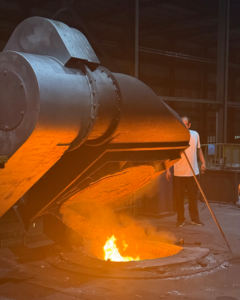
 

Medium-frequency induction furnaces (IF furnaces) are core industrial equipment in metal smelting, forging, heating, and heat treatment.

During operation, they continuously generate current surges, high-frequency harmonics, and operating heat. Therefore, selecting a suitable transformer for the IF furnace is crucial for stable production, safe power supply, low energy consumption, and extended equipment lifespan.

Many smelting plants frequently face common problems such as transformer overheating, excessive noise, frequent tripping, unstable furnace operation, and high electricity costs. In most cases, these problems are caused by incorrect transformer selection and mismatched technical parameters.

Xingniu Transformers explains to industrial buyers and engineers how to select reliable IF furnace transformers, including accurate capacity calculations, standard configuration parameters, and industry best practices.

1、Voltage matching
Medium frequency power supply cabinet (VIP) voltage (input voltage and output voltage)
Determine the primary voltage: 38.5kV, 35kV, 22kV, 11kV, 10kV, etc.
Determine the secondary voltage: 400V, 420V, 575V, 660V, 720V, 800V~1500V, etc.
Selection of pulse for medium frequency furnace
Commonly used are: 6-pulse, 12-pulse, 24-pulse, and 48-pulse.
Medium-frequency furnaces generate a large number of 5th, 7th, and 11th harmonics during operation. Harmonic pollution is a major cause of transformer overheating, abnormal noise, power grid fluctuations, and system tripping. Specialized medium-frequency furnace transformers must be configured with targeted optimization.
6-pulse rectifier transformer. Meets conventional harmonic suppression requirements, offers high cost-effectiveness, and is a perfect match for small and medium-sized smelting and heating equipment.
We recommend a 12-pulse rectifier transformer. It reduces grid harmonics by more than 50%, effectively solves overheating and voltage instability problems, and is specifically designed for large-scale continuous industrial production.
However, it is important to note that the power supply cabinet must be compatible.
Capacity matching
Capacity matching is the core of transformer selection. An oversized transformer will cause unnecessary power consumption and increase basic electricity costs, while an undersized transformer will operate under continuous overload, leading to rapid aging and burnout. Based on industrial efficiency losses, power factor, and safety margins, the standard industrial calculation formulas are as follows: SCR full-bridge furnace: Transformer capacity (kVA) = Furnace rated power (kW) × 1.2 IGBT half-bridge electric furnace: Transformer capacity (kVA) = Furnace rated power (kW) × 1.1

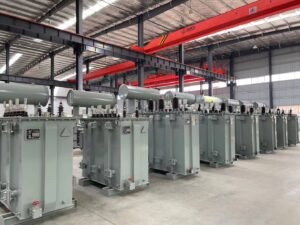
      Finished product images of Xingniu

Winding connection method
It is recommended to select Dyn11 or Dd0 connection groups as the standard configuration for medium-frequency furnace transformers. This structure effectively isolates the third harmonic, prevents harmonic current from flowing into the public power grid, stabilizes the output voltage, and greatly reduces the frequency of equipment tripping.


Industry selection tips and common pitfalls
Many end-users only focus on price while ignoring matching parameters, resulting in frequent equipment failures and increased maintenance costs. Here are key professional selection tips:
  • Do not use ordinary distribution transformers: Ordinary transformers lack harmonic resistance and overload capacity, which will overheat and fail within a short time when used for medium frequency furnace loads.
  • Match pulse configuration according to power: High-power furnaces must use 12-pulse rectification to reduce grid harmonic pollution and ensure production safety.
  • Reserve sufficient power margin: For heavy-load and long-hour production scenarios, appropriately expand the capacity margin to avoid equipment aging caused by long-term full-load operation.
  • Focus on customized parameters: Special working conditions such as special voltage, high altitude, humid environment, and frequent startup require customized transformer structural parameters.