
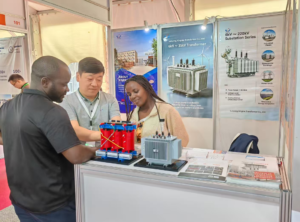
Oil Immersed Transformer Losses for African Buyers
Oil immersed transformer losses affect operating cost and heat inside the unit. Buyers should check both no-load loss and load loss before comparing two quotations.
A low purchase price does not always mean a lower total cost. The correct comparison uses the same capacity, voltage ratio, frequency, impedance, temperature reference and test standard.
Related resources: Oil-Immersed Power Transformers | Transformer Impedance Guide | About XINGNIU
1 What are oil immersed transformer losses
A transformer uses power even when the secondary side carries little or no load. It also produces additional loss when current flows through the windings. These two parts are normally listed separately in the technical offer.
Loss values must be tied to a defined rating and reference condition. A number without the rated kVA, frequency and temperature basis is not enough for a fair comparison.
2 No load loss
No-load loss mainly comes from the magnetic core. It is present whenever the transformer is energized, even if the connected load is switched off. For a distribution transformer that stays energized all year, this value deserves close attention.
Core material, flux density, joint design and manufacturing quality all affect no-load loss. Buyers should also request the no-load current, because it helps describe the magnetizing behavior of the transformer.
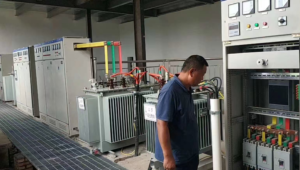
African power distribution commissioning
3 Load loss
Load loss mainly comes from winding resistance and additional stray effects. It increases strongly as current rises. At a steady load, the current-related part changes roughly with the square of the load current.
The quoted value should state its reference temperature. Copper resistance changes with temperature, so two values at different reference temperatures should not be placed side by side without correction.
| Item | Main cause | When it matters most | What to confirm |
| No-load loss | Magnetic core | Unit energized for long hours | Guaranteed watts at rated voltage and frequency |
| Load loss | Winding and stray effects | High current and high load factor | Guaranteed watts and reference temperature |
| No-load current | Magnetizing requirement | Energizing and core behavior review | Percentage of rated current |
| Impedance | Winding geometry and leakage field | Fault current and voltage-drop study | Percentage at rated base |
4 Which loss matters more
The answer depends on the operating profile. A lightly loaded transformer that remains energized for long periods may accumulate more no-load energy loss. A unit that runs near full capacity for many hours makes load loss more important.
Mines, workshops, steel plants and public distribution networks can have very different load curves. Send the expected average load, peak load and daily operating hours when the project needs a life-cycle cost comparison.
5 Do not compare loss alone
Loss is only one design result. Buyers must also compare impedance, temperature rise, insulation level, tap range, vector group, cooling method and permitted noise level when these items are specified.
A lower impedance can increase short-circuit current. A compact design can also create a different thermal condition. The selected transformer must meet the complete system requirement, not one attractive number.
6 How temperature rise and cooling are related
Transformer loss becomes heat. The tank, oil and cooling surfaces must remove that heat within the agreed temperature-rise limit. Natural or forced cooling may be selected according to capacity, load and site conditions.
High ambient temperature and high altitude can reduce cooling performance. African buyers should provide the maximum ambient temperature, installation altitude and indoor or outdoor location before the design is confirmed.
7 What to request in the quotation and test report
Ask the supplier to list guaranteed no-load loss, load loss, no-load current and impedance. The technical sheet should also show rated capacity, primary and secondary voltage, frequency, vector group, cooling method and temperature-rise limit.
After production, check that the routine test report identifies the same transformer and rating. If the tender applies loss tolerance or capitalization rules, send them before quotation because they can change the design and price.
8 Confirmed XINGNIU export reference
XINGNIU has supplied transformers to customers in Sudan and Zambia. Oil immersed transformers are the company’s main export product type. For African projects, common discussion ranges are 100 kVA to 2500 kVA and primary voltages such as 11 kV, 22 kV and 33 kV.
The available records do not confirm the individual loss figures, impedance, temperature rise or exact ratings of those shipments. This article does not assign unverified numbers to them. A detailed public case still needs an approved nameplate or test report, order quantity, application and delivery date.
9 XINGNIU design and delivery
XINGNIU is a source factory and can customize the capacity, voltage and accessories. The design uses full rated capacity and focuses on low loss and low temperature rise. Final guaranteed values are confirmed in the project technical sheet instead of copied from a general sales claim.
Normal production lead time is 15 to 25 days after technical confirmation. The warranty is one year. Send the load profile and tender limits with the inquiry so the factory can prepare a useful comparison of oil immersed transformer losses.
Frequently Asked Questions
Is no-load loss present when the transformer has no connected load?
Yes. It is present whenever rated voltage is applied to the transformer, even when secondary load current is very small.
Why does the reference temperature matter for load loss?
Winding resistance changes with temperature. Quotations should use the same reference temperature before their load-loss values are compared.
Does lower loss always mean a better transformer?
Not by itself. The transformer must also meet capacity, voltage, impedance, insulation, temperature-rise, cooling and site requirements.
What data should an African buyer send?
Send capacity, voltage ratio, frequency, expected load profile, ambient temperature, altitude, impedance requirement, loss limits, cooling, accessories and quantity.
Request a Technical Offer
Send XINGNIU the rated capacity, voltage ratio, frequency, load profile, loss limits, impedance, temperature rise, cooling, site conditions and quantity. We will review the data and prepare a matched oil immersed transformer proposal. Contact our team for a technical quotation.
